
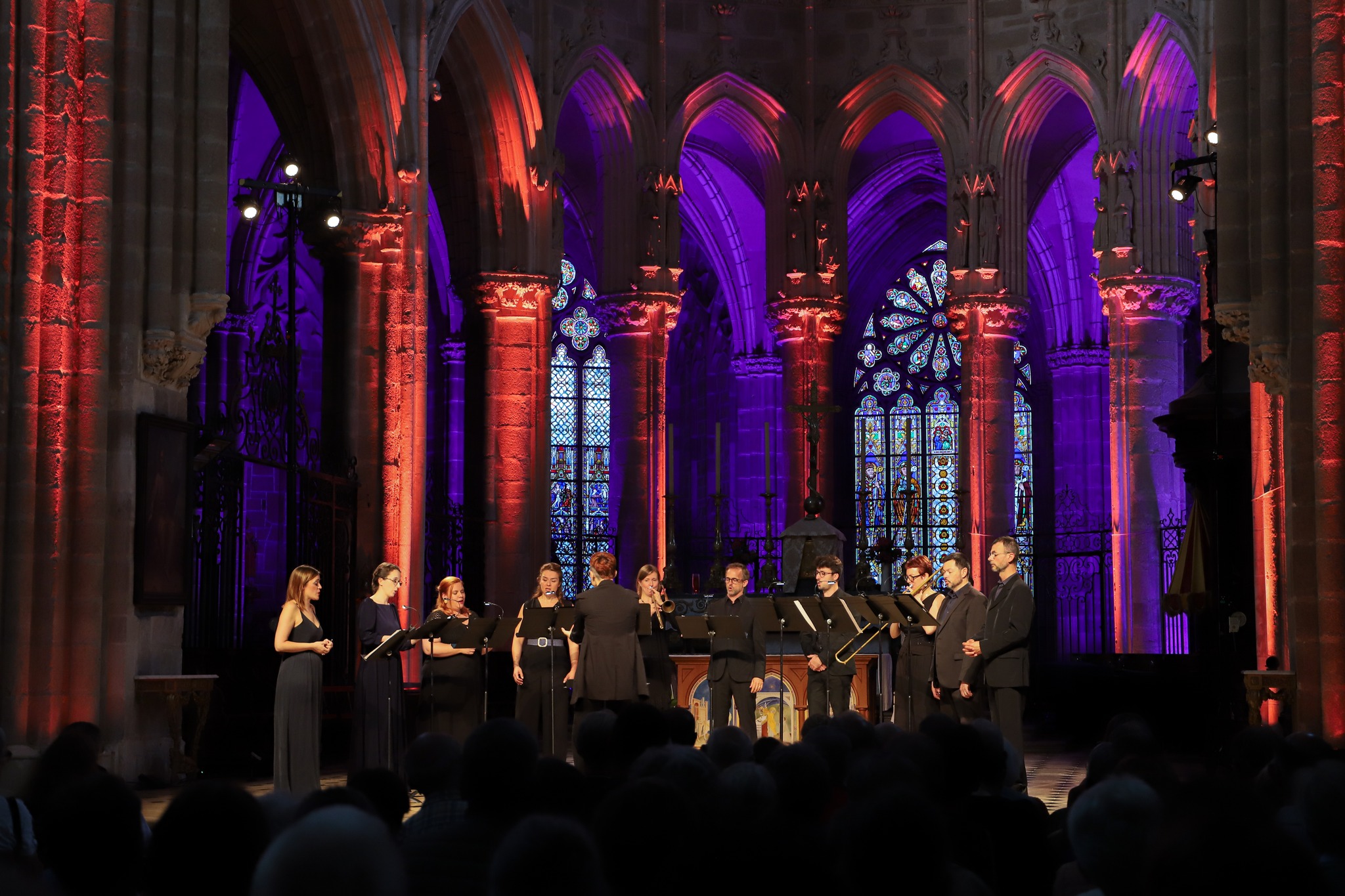
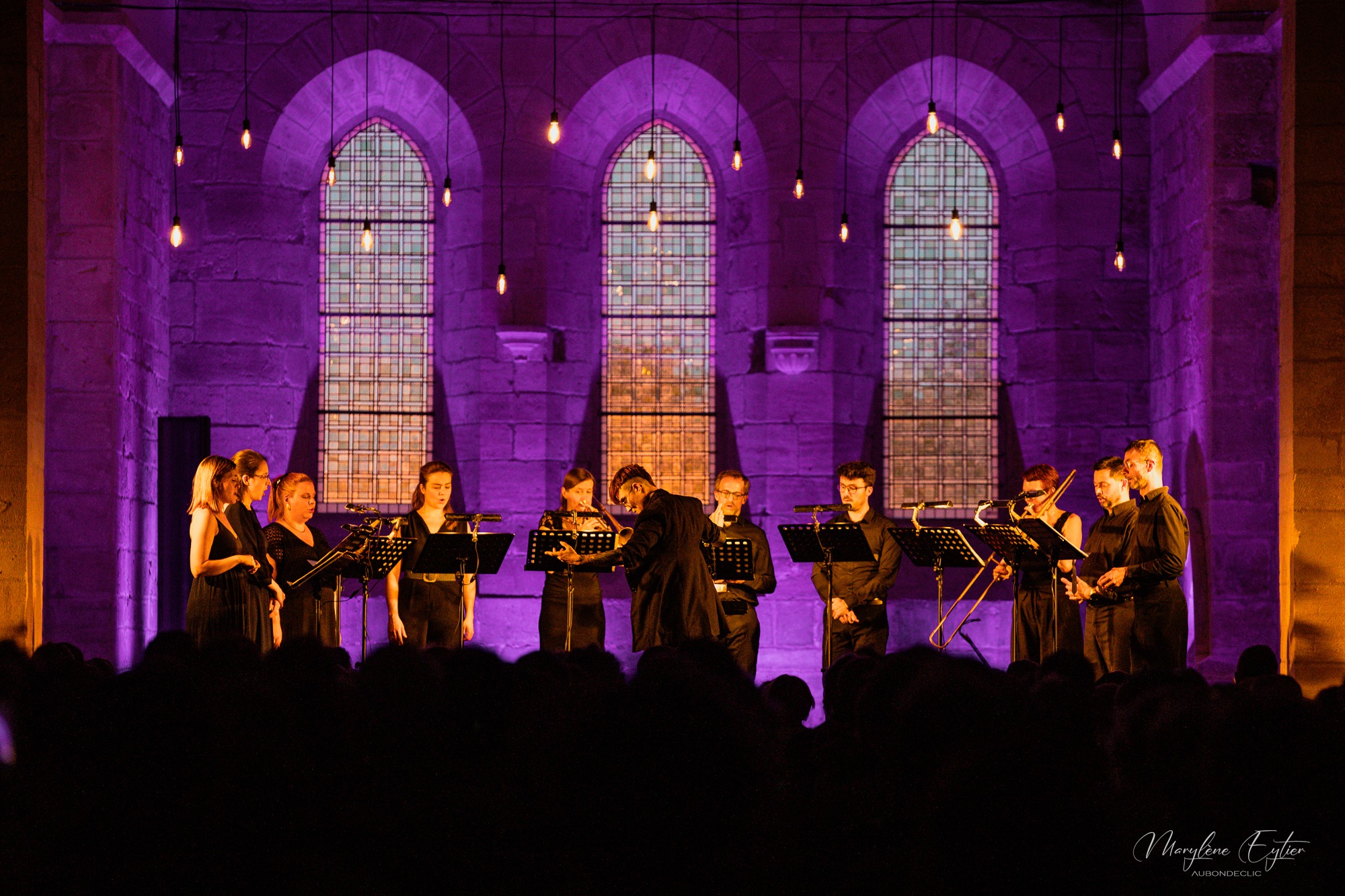
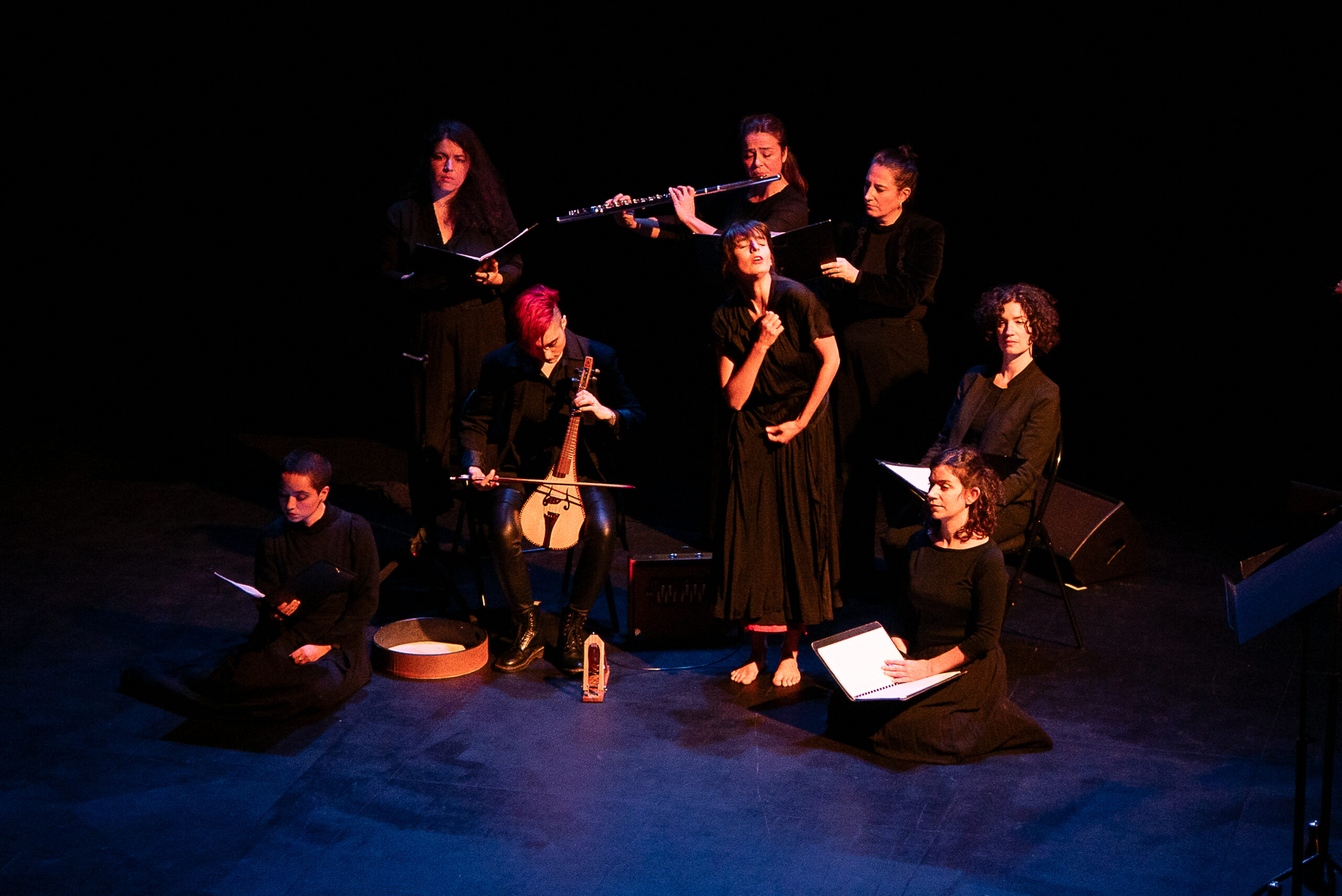
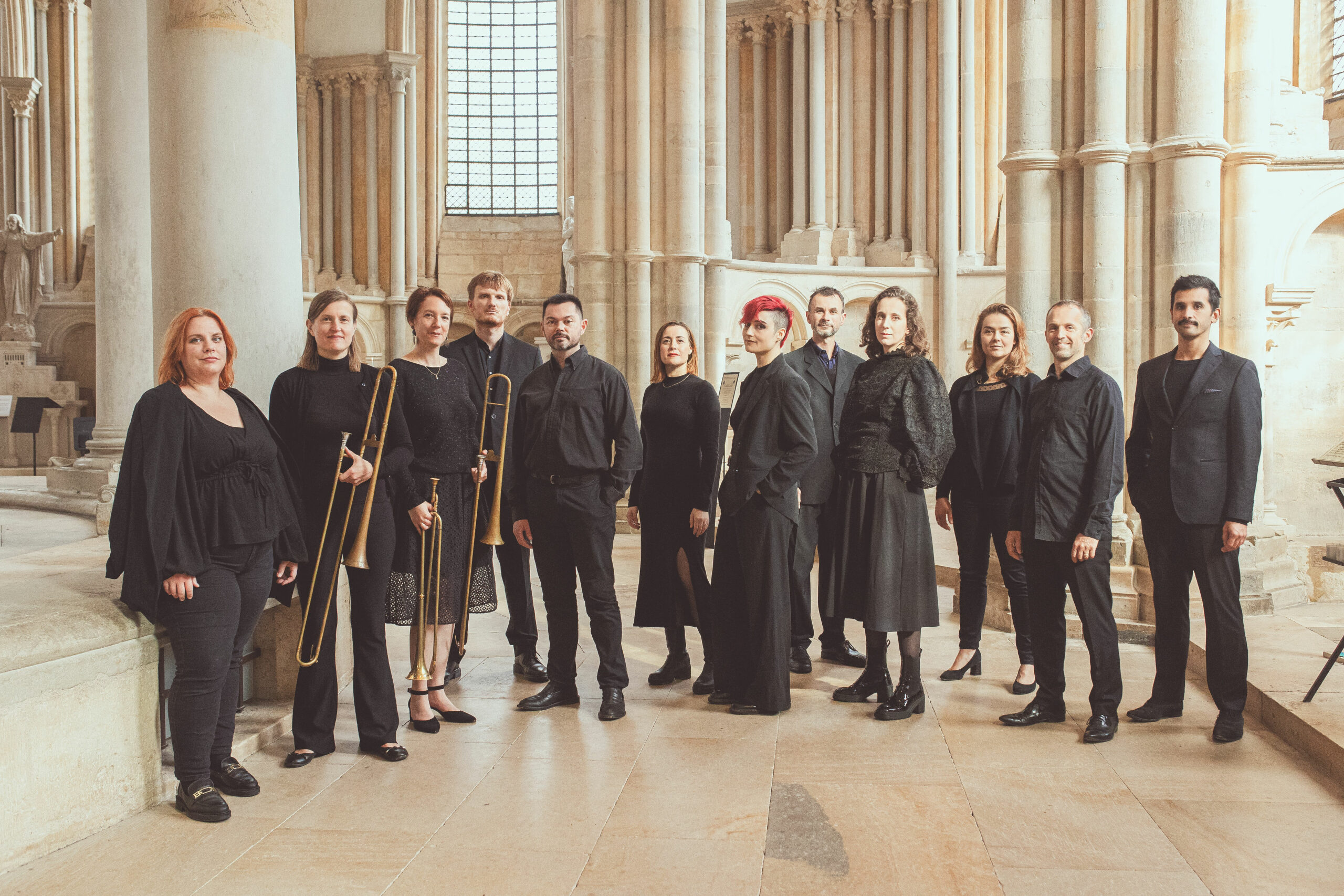
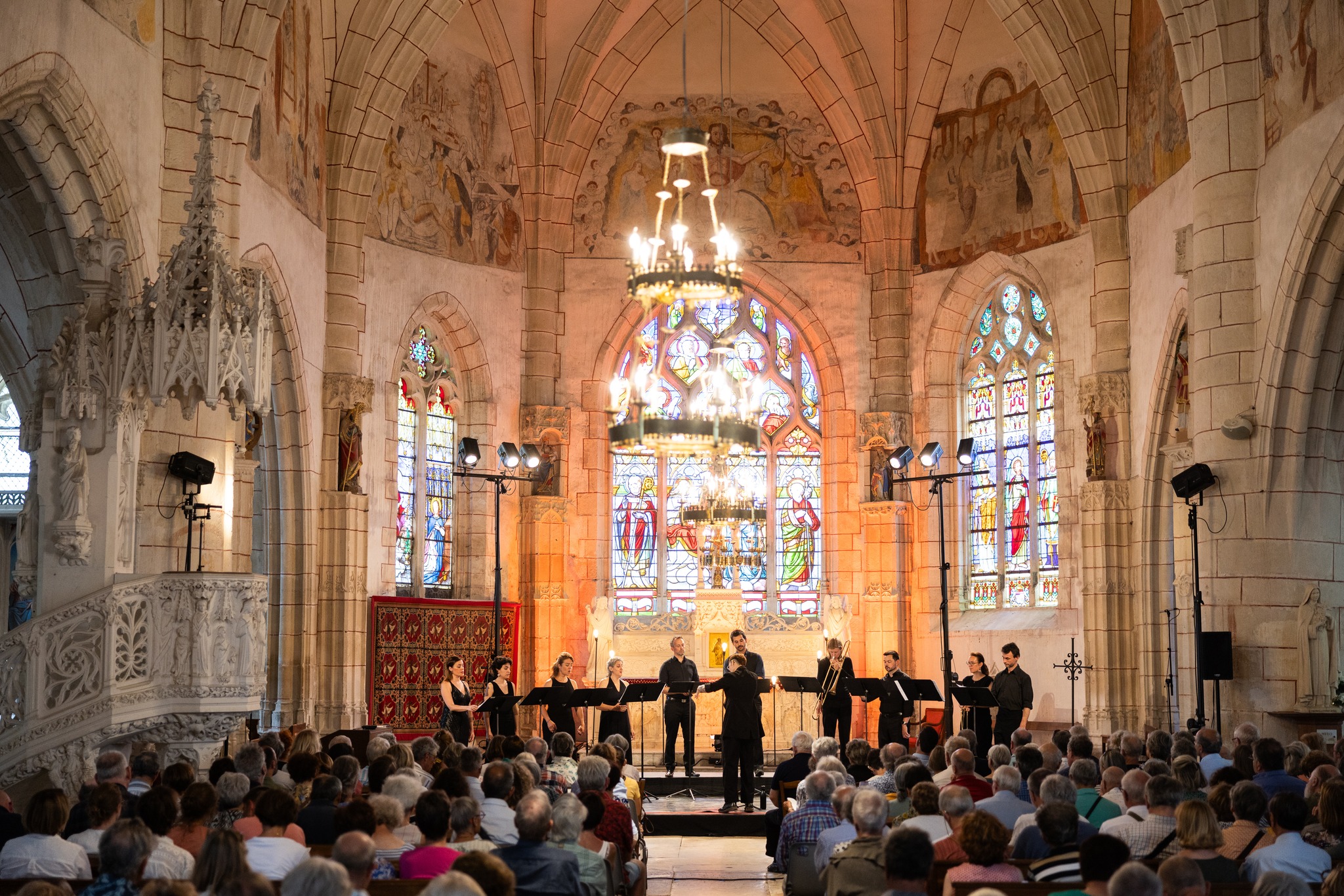

9 artists, a cappella octet
For both France and the Holy Roman Empire, the late 15th and
early 16th centuries were a turbulent period. The rivalry between the Valois and the Habsburg
sustained a never-ending war, punctuated by brief periods of
peace.
But the greatest upheaval—the one that would change the face of Europe—would come
from Wittenberg on October 31, 1517, when Luther presented his theses to the Archbishop
of Mainz, giving rise to the Reformation.
Two dynasties clash; soon, two forms of Christianity will tear each other apart. Yet,
just as the waters of the Rhine in Melissus’s poem “mix the waters of the Main and the
Moselle*,”the musical legacy of the Burgundian school unites the composers
under a single banner.
The motets of Brumel and Mouton are complemented by thoseof Isaac, Walter, Finck, and
Stoltzer, the latter offering the very first sacred polyphony in the vernacular language
: “Erzürne dich nicht über die Bösen,” based on Psalm 37 in the
translation by Luther himself.
*Ad Rhenum, Paul Melissus, 1539–1602*
